Monday, August 17, 2009

If You Have a Good Appetite for Great Food and Film . . .


On the drive to the theater to see “Julie and Julia,” I was thinking about a report I’d read earlier in the day about the rise of obesity in America—how two-thirds of us are either overweight or obese, and how on average we’re 23 pounds overweight.

That was on the drive over. During and following the film, all I wanted to do was eat.

Of course, what I longed for was not what is making us fat—not poorly produced, corn-fed, high fructose corn syrup calorie and fat-injected food, but a fine meal—the kind that feeds the soul while nourishing the body.

What I settled on was three-quarters of an exquisite piece of key lime pie at Gracie Rae’s, which did feed my soul, but not as much as the late evening ambience, the sun-streaked bay, and the gentle kiss of evening on the soft, brine-tinged breeze.

The article I had read about how we’re eating ourselves to death, argued that obesity, like tobacco and alcohol abuse, isn’t just dangerous, but expensive. New research shows medical spending averages $1,400 more a year for an obese person and the overall obesity-related health spending is around $147 billion, double what it was nearly a decade ago (according to the journal Health Affairs).

We’ve got a problem. Our approach to food. Our approach to life. The hole in the secret depths of who we are can’t be filled with food alone.

Our great national sins, the ones so deeply a part of who we are they don’t get very many sermons, don’t get marches or signs or bumper stickers, and don’t decide elections, are greed and gluttony. But the film is the antithesis of our self-destructive behavior—a celebration of good food and of women and marriage and life.

The film is about the appreciation, not the aberration and exploitation of food. The way alcohol is not an issue for people who drink moderately, food is not an issue for non gluttons.

Food, like sex or work or religion or family or alcohol, can be both cause for an used in celebration—something that leads us into transcendence—or it can be merely something we do, mundane, thoughtless, animalistic.

For both Julia and Julie, food is far, far more than just fuel.

Julia Child (Meryl Streep) and Julie Powell (Amy Adams) are featured in writer-director Nora Ephron’s adaptation of two bestselling memoirs: Powell's “Julie & Julia” and “My Life in France,” by Julia Child with Alex Prud'homme. Based on two true stories, “Julie & Julia” intertwines the lives of two women who, though separated by time and space, are both at loose ends . . . until they discover that with the right combination of passion, fearlessness and butter, anything is possible.

We live in a time and a place of plenty, which won’t last—it can’t—but what do we do while it does? Can we have the discipline to deny ourselves, the compassion to share our undeserved abundance, the wisdom and humility to be grateful, the spiritual insight to perceive what is beyond nutritional necessity? The answers are all too obvious, but we’re a young species. Maybe we’ll survive our adolescence to become who we’re meant to be.

We all have a relationship with food, and we all have to figure it out.
But food isn’t the only relationship that is explored in the film. There’s also Julie and Julia’s relationships with friends and family and society, and especially, their relationships with their husbands.

Both Julie and Julia became who they did thanks in part to the encouraging, supportive spouses in their lives. Rarely has marriage been so positively portrayed on screen. Not only does Ms. Ephron love good food, but, after a very public unhappy marriage and acrimonious divorce, she now loves being married. Both her relationship to food and her husband shine through her script and her camera and onto the screen.

“Julie and Julia” teaches ever so gently that the keys to a good life and relationship are genuine love, respect, and support given to and received from our significant others, authenticity, real purpose, fidelity to self and calling, hard work, good food, good sex—and a good appetite for all of these.

Like a consummate chef preparing a special meal for treasured friends and family, Ms. Ephron has taken the recipes found in both Julie and Julia’s books, added her own ingredients, and cooked up a near flawless film. All that’s left to say is bon appétit. Come with a good appetite to this good film about good people and good times and the good food that makes everything even better.

Wednesday, August 5, 2009

The Truth is Uglier than You Think


“Treat a hot girl like dirt and she’ll stick to you like mud.”

This bit of misogynistic venom spit out by Sam from “Slackers” seems less an explanation for his doin’ dirt to girls than the philosophy of a generation.

Recent romantic comedies—even those that purport to reveal how guys really think—too often justify, even romanticize sexism and misogyny.

It’s alarming how prevalent—check that—how celebrated bad behavior is (and not just in rap songs and man-child movies). It’s even more alarming how many women allow, even expect it.

Listen to how the studio is promoting the romantic comedy “The Ugly Truth.”

The battle of the sexes heats up in Columbia Pictures comedy “The Ugly Truth.” Abby Richter (Katherine Heigl) is a romantically challenged morning show producer whose search for Mr. Perfect has left her hopelessly single. She's in for a rude awakening when her bosses team her with Mike Chadway (Gerard Butler), a hardcore TV personality who promises to spill the ugly truth on what makes men and women tick.

The female character is “romantically challenged” and “hopelessly single,” the male character is “hardcore” and “truth-telling.” Relationships are framed as a battle—or at best a game. The problem with this paradigm is someone has to win and someone has to lose, someone has to dominate and someone has to submit. With the poster picturing the two would-be lovers as the kind of blocky black figures you find on restroom doors with red hearts—the woman’s on her head, the man’s on his crotch, the battle is framed in the ancient way of men only wanting sex and women having to withhold it until the man surrenders to her terms of marriage—or at least until it’s certain he wants more than just her body. In this oppressive and flat out wrong paradigm, men give “love” to get sex and women give sex to get “love”—men are only hounds and women are only virgins or sluts.

Chadway’s ugly truth is that men only want sex—lots and lots of sex. And while I only speak for one man, the problem with the caricatured formulation is that it’s only partially true. Truth is usually far more nuanced, subtle, complex. Many men, maybe most (even us good guy feminist types) want as much sex as we can get, but that’s not the only thing we want. And yet, that is the only thing some guys want from some girls, and the only thing other guys want from all girls.

The real ugly truth is that our culture is so sexist Sam’s and Mike Chadway’s mentalities (and that of the girls they’re involved with) shouldn’t surprise us. And it’s not just them. We have systemic sexism—justified by the powerful, sanctified by the religious, tolerated by all who thoughtlessly accept culture as not only the way things are, but the way things are supposed to be.

The uglier truth is the reason misogynists like Mike Chadway and Sam get so much play is far more a failure of parenting than culture. Succumbing to culture, they’re parents failed them as did the parents of all the girls allowing them to treat them badly. By what they said or didn’t say, by what they did or didn’t do, by what they modeled or by their absence, parents are raising entitled boys to use and abuse, to manipulate and take, and move on, and girls who keep kissing frogs and believing fairytales because they aren’t given the tools to imagine anything else.

Obviously, I found “The Ugly Truth” thought-provoking—but more because of its assumptions than what was on the screen. And though it provided a few laughs and a couple of “moments,” it’s dangerous propaganda.

“Yo, Lister, lighten up. It’s a comedy,” I can hear some readers saying.

And they’d have a point, but sexism, like racism or classism or homophobia or xenophobia, is only funny when being laughed at, not with.

Here are a few of my truths:

—He’s not strong and silent, he’s barbaric and emotionally stunted.

—Drama and sick dynamics don’t equal desire or passion, just dysfunction.

—It’s not just that he’s not that into you, he’s not into anyone but himself.

—There are far far far worse things than being single.

—If a person’s not growing and evolving on his or her own, he or she is not going to do it for you (for very long).

—Character is reality, charm is an illusion.

—If you find self-centeredness sexy, you need counseling.

—There’s a reason it takes several drinks to do what you’re about to do.

—It’s not that women don’t like sex as much as men, it’s that far too many sexual encounters are mostly (if not exclusively) about male satisfaction. (Just because those three minutes were heaven for you doesn’t mean it did anything for her.)

—If being treated badly feels good and being treated good feels bad, your operating system has a virus and needs deprogramming and reprogramming.

Like, “He’s Just Not that Into You,” “The Ugly Truth” claims to be telling truths about men, about how we are really sex-obsessed users (I for one am no user), but then end by reaffirming the sexists suppositions they claim to be exposing. Both films undermine everything they were saying with unearned, incredible happy Hollywood endings.

The guy who’s just not that into you, who keeps giving you all the signs that he only wants sex and not a relationship, realizes by the end of the movie that you’re his soul mate and Mike Chadway is only misogynistic because he has a woman-wounded heart. See, men really do have hearts hidden somewhere behind their enormous erections—all you have to do is persist, keep kissing frogs, keep hoping for the best, keep ignoring the signs and the guy who says he doesn’t want to marry you, eventually will, the guy who says he doesn’t want a relationship will realize he really does. All you have to do is keep playing his game—or the next guy’s game, or the next, or the next and eventually you’ll win. Am I the only one who thinks these are tragedies not comedies?

Wednesday, July 29, 2009

Jill and Kevin’s Infinite Entrance


Some people just know how to make an entrance.

Jill and Kevin do.

If you haven’t seen their wedding entrance, you should. Go here to view it: http://www.youtube.com/watch?v=4-94JhLEiN0 and become 1 of over 11 million who have watched it in its first week of existence.

I’ve watched it a dozen times already—and each and every one I laugh and I cry simultaneously.

Why have over 11 million people watched Jill and Kevin and their wedding party march down the aisle? Why have I (and so many others) watched it over and over again? Why did it bring a smile to my face even as it brought tears to my eyes?

Perhaps partly because the best things online, from how-to videos to advice columns, from parodies to porn, involve amateurs—DIYs, poets, independent artists, and stay-at-home-moms who now have a means to share their ideas, their work, themselves.
Professionals do it for money, but amateurs do it for love.

A professional is someone who makes a living doing what they do, an amateur is someone who loves it so much they live to do it.

As a writer, I’ve always attempted to be a professional-amateur—striving for the skill, and knowledge, expertise, and experience of a professional, yet having love as my primary if not only motivation. I write because I love to, and I write about what I love (and I love Jill and Kevin and their friends!).

There’s not a professional dancer among them, and there are only a few decent ones. And that’s what makes it so moving, so powerful, such a You Tube phenomenon.
We’d expect to see art students or professional performers dance their way down the aisle of a nonreligious venue they were getting married in, but for average Jills and Joes to dance down the aisle of a church as part of what looks to be a fairly traditional wedding . . . It’s not just unexpected, it’s refreshingly authentic.

Give me genuine actions over polished performances any day.

But that’s only part of the reason this five minute video has become the most popular clip flying through cyber space at the moment.

Another reason? Friends.

Having friends to stand with us during the momentous or difficult days of our lives is something we all deeply and desperately need (and increasingly don’t have), but to have ones who will dance with us—what could be better? What is a friend after all, but someone who cares enough for us to weep when we weep, dance when we dance?

I try to be the kind of friend who will gladly dance down the aisle of life with others, and am constantly looking for friends who will do the same. They are not easy to find—Jill and Kevin are truly blessed.

I suspect yet another reason the video has become so popular is the song.
Let me be clear, I don’t think a woman should be with a man who hits her—not even one time (and it’s never just one time), and I will not be buying any more of Chris Brown’s music. A man who would beat a woman—any person who would use their relative power, be it physical or otherwise to impose his or her will, has lost the best part of their humanity and needs treatment not a world tour. That said, art transcends the artist in the way truth transcends the flawed vessel it’s poured through, and the song was an excellent choice for a young couple dancing down the aisle together.

It's you and me moving
At the speed of light into eternity yea,
Tonight is the night to join me in the middle of ecstasy.
Feel the melody in the rhythm of the music around you, around you

It’s like I’ve waited my whole life for this one night
It’s gonna be me you and the dance floor
’cause we've only got one night (one night)
Double your pleasure
Double your fun and dance
Forever (ever, ever)

Some people really do seem to see marriage as the “one night” they wait their whole lives for—anticipate, long for, feel less than without. And though marriage began as a sexist institution for men to protect their property (which included their wives) and has become a prison of culture and a weapon of exclusion, it’s still possible for good, healthy, relationships to exist within it in spite of all this, in the same way humble, honorable, compassionate, there-for-the-right-reasons people are present in the flawed and broken institutions of religion. I hope Jill and Kevin have an empowering union that supports each of them in becoming their best selves. They appear to be off to a good start.

Finally, I think the video has become so popular because it involves dancing.

Dancing does something for our species that nothing else can. It’s primal and comes from the deep soul, and in the industrialized, post-modern West, we don’t do it enough. Sure we have dance as seduction, as sex with clothes on, and there’s certainly a place for that. We have Dancing with the Stars and overly choreographed, overly structured dancing in certain places at certain times. We have dancing for others—demonstrating moves to impress or woo, but what about just dancing to dance—dancing because we are alive and few things feel as alive as feeling rhythm in our souls and expressing it through our bodies. Losing ourselves in something as spiritual and magical as music and dance is truly transcendent. But that’s the key—losing that sense of self (and the self-consciousness it causes) in becoming one with the beat, the group, the world. Kevin and Jill and their friends may have been self-conscious and part of what they were doing may have had elements of performance, but most of it appears to be pure joy, caught up in the moment, being a good friend, being a—just being.

When I dance, which is often and often alone, it’s because I’m experiencing something I can’t contain, and when I do, I join the rocking rhythm of the undulating universe, whose strings are in constant creative motion, and in some mysterious way I’m joining all dancers—from King David of Israel to Michael Jackson to ancient indigenous tribes in Africa to as beautiful a bride as there has ever been, Jill, in a cosmic chorus that is primal, communal, sacred. Why not join us? At this very moment life is saying to you, May I have this dance?

Saturday, July 25, 2009

Ignore Everyone (at least at first)


If you want to be creative, actually live creatively, Hugh MacLeod has some great advice for you. His new book, “Ignore Everybody and 39 Other Keys to Creativity” offers encouragement for artists and entrepreneurs, but everybody should read it. After all, creativity is humanity’s birthright—not just that of artists or visionaries. As MacLeod says in his insightful little volume, “Everyone is born creative; everyone is given a box of crayons in kindergarten.”

As someone who attempts to live from the soul, to be true to my creative callings, who spends the majority of my time in artistic endeavors, I find “Ignore Everybody” encouraging, inspiriting, affirming. But it’s not just for people like me. As a book about ideas and ways of living, it’s as much for new mothers as novelists, accountants as much as artists, makeup counter salespeople as much as musicians.
What is being creative except being true to yourself—to your very own unique, idiosyncratic individuality?

Since our best selves are our creative selves, MacLeod’s work should be viewed as a lifestyle advice—strategies for being your truest, most original, most you, you.

“Ignore Everybody” shares how when Hugh MacLeod was a struggling young copywriter, living at a YMCA, he started to doodle on the backs of business cards while sitting at a bar. Those cartoons eventually led to a popular blog – gapingvoid.com – and a reputation for pithy insight and humor, in both words and pictures.

MacLeod has opinions on everything from marketing to the meaning of life, but one of his primary subjects is creativity. How do new ideas emerge in a cynical, risk-averse world? Where does inspiration come from? What does it take to make a living as a creative person?

“Ignore Everyone” expands on his sharpest insights, wittiest cartoons, and most useful advice.

Of course we shouldn’t really ignore everyone. We all need trusted counsel, we all benefit from editing, from being questioned and challenged. Openness to criticism, to feedback, to advice helps us become even better, keeps us grounded, but as MacLeod says, “the more original your idea is, the less good advice other people will be able to give you about it.” He goes on to say, “You don’t know if your idea is any good the moment it’s created. Neither does anyone else.” This is why “good ideas have lonely childhoods” and “the better the idea the more ‘out there’ it will initially seem to other people, even people you like and respect.”

It’s this kind of simple, sage advice that makes “Ignore Everybody” so empowering, compelling, wise.

Here are just a few of the many wonderful keys found in this fine book:

The best way to get approval is not to need it. This is equally true in art and business. And love. And sex. And just about everything else worth having.

Selling out is harder than it looks. Diluting your product to make it more commercial will just make people like it less.

If your plan depends on you suddenly being “discovered” by some big shot, your plan will probably fail. Nobody suddenly discovers anything. Things are made slowly and in pain.

Don’t try to stand out from the crowd; avoid crowds altogether. There’s no point trying to do the same thing as 250,000 other young hopefuls, waiting for a miracle. All existing business models are wrong. Find a new one.

The idea doesn’t have to be big. It just has to be yours. The sovereignty you have over your work will inspire far more people than the actual content ever will.

The best you can ever be is your best self. “Ignore Everyone” encourages you towards being nothing more and nothing less than just that, and gives you strategies for achieving it.

(Because of all the talk about self in the book and in this column, I feel it important to add that this is the beginning, not the end. Being creative, following our own souls, on our own unique paths, is not the end, but the means. The most rewarding thing we can do in life—with our lives as well as our creative endeavors—is share them with others, contribute to our community, to the world, those things only we can. We are given gifts to nurture and develop yes, but mostly so we can give them away. It’s what gifts are for.)

Thursday, July 16, 2009

Another Lynch Travels a Lost Highway


Few things are as disquieting as a desolate highway.

David Lynch obviously understands this—think of the lights of the lone limo descending down the dark, circuitous decline of Mulholland Drive.

His daughter, Jennifer Lynch, writer-director of the affectingly disturbing “Surveillance,” knows it, too.

The talented Ms. Lynch hasn’t directed a feature film since 1993’s “Boxing Helena,” for which she was unjustly skewered. I’m not saying her debut was a good film, just that critics were far too harsh—probably because of her last name.

Here, in her sophomore effort, the director with the famous dad, shows she can write and direct and disturb—and what daddy does with surrealism, she accomplishes with stark reality.

“Surveillance” opens with a streaky, smeary, slow-motion prologue in which two gruesomely masked killers attack a sleeping couple in their bed. They bludgeon the man, but the woman manages to escape, and they pursue peruse the screaming, frightened figure down a dark road. Sometime later, two FBI agents, Elizabeth Anderson (Julia Ormond) and Sam Hallaway (Bill Pullman), arrive at a local police station in the Santa Fe desert to investigate a series of murders—a mass slaughter by two figures dressed in jumpsuits and latex masks on the highway from the day before—presumably connected to the film’s disturbing opening.

The Feds interview three witnesses—crazy, corrupt cop, Jack (co-writer, Kent Harper), tweaked-up junkie, Bobbi (Pell James), and a stoic little eight-year-old girl named Stephanie (Ryan Simpkins)—all of whom recount their version of the roadside rampage while being videotaped, Agent Hallaway watching the monitors.

In a nod to Rashomon, each tells a different story in the form of flashbacks—all but the eight-year-old Stephanie, lying—or at least distorting events to cover up their depravity.

“Surveillance” is shot on video, often through monitors, which fits both its name and the gritty realism of its story.
Eerie and engaging, this neo-norish nightmare is not for the faint of heart, but if you like the dark detours of lost highways you’ll probably appreciate this continually involving film.

In addition to a fine job of writing and directing, Ms. Lynch did a great job of casting—particularly of the three most crucial characters. Julie Ormond and Bill Pullman (both of whom have appeared in David Lynch films) are excellent, and the little Ryan Simpkins is extraordinary.
“Surveillance” is short, but Ms. Lynch manages to make everyone of its 97 minutes impactful, menacing, memorable.

If you’re not afraid of the dark, not easily disturbed (or enjoy being so), and don’t plan to take any road trips in the near future, this non-joyride may be just the journey for you.

Note: Not only did I find the film interesting, but equally so was the way I watched it. This is just the kind of independent, low-budget movie that never makes it to theaters like the ones we have around here, and even though it has just been released, I watched it on TV.

No, I didn’t illegally download it. I watched it On Demand, and I applaud the person who pulled the trigger to let it be released in this way at the same time it was being released to theaters. All movies should be, but until we get there, smaller, independent films that only play in select cities would be wise to always do simultaneous releases—ensuring reviews like this one are not wasted on readers who might not remember it six months from now when the DVD comes out.

Thursday, July 9, 2009

The Precious Illusions of a Perfect Film


There’s entertainment, then there’s art. A work can be both, one or the other, or neither. Recently, I’ve written about entertainment while reviewing movies such as, “The Hangover,” “The Taking of Pelham 123,” and “The Proposal.” This week I present to you a film that, though entertaining, is a staggering work of art.

If, like me, you find the entertainments at your local Cineplex mostly lacking, then thank God for DVD and digital download, and re-watch one of the greatest movies ever made.

Alfred Hitchcock was a master—a genius with a rare talent that garnered him both commercial and critical success, a true artist who worked within the studio system and entertained the masses. His work includes some of the greatest, most extraordinary films ever made. But the master’s masterpiece is unquestionably “Vertigo.”

I’ve lost track of how many times I’ve seen this extraordinary film (probably close to 30 times), but my most recent screening was in high definition thanks to Apple TV, and it was stunning.

I think a convincing case can be made that “Vertigo” is the greatest, most flawless film ever made, but even critics and scholars unwilling to go that far, say it’s in some very elite company.

Truth is, you can’t go wrong with any Hitchcock flick, particularly those from the 40s and 50s, beginning with “Saboteur” and ending with “Marnie.” There are so many remarkable films from this period, including “Suspicion,” “Spellbound,” “Shadow of a Doubt,” “Notorious,” “Strangers on a Train,” “I Confess,” “Rear Window,” “North by Northwest,” “Psycho,” and “The Birds.”

Stop and think about it for a moment. Those are some of the very best the art of cinema has to offer, and they were all made by this one amazing artist and the collaborators he assembled, but as amazing as all of Hitchcock’s films are, “Vertigo” is singular, peerless, surpassing even his own astonishing achievements.

Based on the French novel “D’Entre Les Morts” (From Among the Dead) by Pierre Boileau and Thomas Narcejac, the script for “Verito” was written by Alec Coppel and Samuel Taylor, though like all his movies, Hitch’s hand can be seen here, as well.

John "Scottie" Ferguson (Jimmy Stewart) is a retired San Francisco police detective who suffers from acrophobia and Madeleine is the lady who leads him to high places. A wealthy shipbuilder who is an acquaintance from college days approaches Scottie and asks him to follow his beautiful wife, Madeleine (Kim Novak). He fears she is going insane, maybe even contemplating suicide, because she believes she is possessed by a dead ancestor. Scottie is skeptical, but agrees after he sees the beautiful Madeleine.

After rescuing Madeleine from a leap into San Francisco Bay, he becomes obsessed with her. Later, when, because of his vertigo, he is unable to save her a second time, he becomes obsessed with recreating her—and he thinks he’s found just the girl for the part, a redhead from Kansas named Judy.

“Vertigo” is a character-driven story about lost, wandering people—physically restless, spiritually rootless, whose fatal pursuit of an elusive romantic ideal opens them up to exploitation and ultimately emptiness.

The sometime criticism that “Vertigo” is too slow is unfair and unfounded. After the fast chase of the opening, the film begins a slow chase, a long fluid, vertiginous,
dreamlike pursuit of something that doesn’t exist, and how could it be otherwise?

From the opening credit sequence to the final image, “Vertigo” is a downward spiral, a long, nightmarish, free fall in one of America’s most vertical cities, San Francisco.

Hypnotic and haunting, every aspect of “Vertigo” is affecting—from the script to wardrobe to set design (notice all the reds and greens representing the stop and go of vertigo, the fear of falling and the simultaneous desire to) to Bernhard Herrmann’s pitch perfect soundtrack, and most of all, the performances, particularly that of Jimmy Stewart, who’s an underrated dramatic actor with the ability to go to very dark places.

The above excellence is due to the director. All these facets of film were shepherded into being. No one has ever come close to matching Hitchcock’s genius in both quality and quantity, and I honestly don’t believe anyone ever will.

The auteur theory, which posits that the director is the “author” of a film, applies to Hitch more than any other Hollywood studio filmmaker in history—and he is more the author of “Vertigo” than any other of his pictures.

Like any work of art, it’s reductive to say that “Vertigo” is about anything. In a way, it, like all inspired works of art, is about everything (and nothing). But of all its themes, of all that it explores, for me the most devastating is doomed romanticism—the obsessive desire to possess a projected fantasy, the dangerous denial of reality in order to recreate again and again an illusion.

Listen to this haunting exchange:

Judy: Couldn't you like me, just me the way I am? When we first started out, it was so good; we had fun. And . . . and then you started in on the clothes. Well, I'll wear the darn clothes if you want me to, if, if you'll just, just like me.

Scottie: The color of your hair . . .

Judy: Oh, no!

Scottie: Judy, please, it can't matter to you.

Judy: If I let you change me, will that do it? If I do what you tell me, will you love me?

Scottie: Yes. Yes.

Judy: All right. All right then, I'll do it. I don't care anymore about me.

Have more sad, tragic, pathetic words ever been penned—“If I let you change me, will that do it? If I do what you tell me, will you love me?”

This exchange calls to mind “the girl” in Hemingway’s brilliant “Hills Like White Elephants,” who being bullied into an abortion by her American lover, says, “Then I’ll do it because I don’t care about me anymore.”

The notion of self-annihilation in order to be loved is so outlandish, so counterintuitive, yet on display around us every day.

How often have our lovers tried to change us? How often have we let them, hoping like Judy, that if we do they’ll finally love us?

It’s not love, of course, which only gives and accepts. In fact, it’s the antithesis of love—selfish, conditional, abusive. As Donald Spotto writes, “Perhaps never have exploitation (disguised as love) and self-annihilation (disguised as self-sacrifice) been so tragically presented in film . . . it amounts to the very definition of false love—a passion which is narcissistic on the one hand and neurotically self-destructive on the other.”

In an example of masterful audience manipulation that equals his use of it in “Psycho,” Hitch has us resent Scottie’s friend when she attempts to break the spell by mocking the fantasy, and by getting us to desire Judy’s transformation into Madeleine nearly as much as Scottie—tell me it doesn’t bother you when, returning from the salon, Judy’s hair is the color of Madeleine’s, but not the style.

As in “Rear Window,” Jimmy Stewart as Scottie Ferguson, is Hitch’s stand-in, but instead of being a photographer seeing everything through the removed view of a camera lens, this time he’s an obsessed director turning a woman into the woman—Hitch’s ideal blonde remade over and over again through Ingrid Bergman, Anne Baxter, Grace Kelly, Eva Marie Saint, Janet Leigh, Tippi Hedren, and this time, Kim Novak. It’s a haunting example of art imitating life imitating art.

“Vertigo” is a film of authenticity and grandeur, a flawless masterpiece where every single element—every single one—works together perfectly to cast a spell we remain under long after the final shot of Scottie standing on the bell tower, arms spread out, drained, devastated, death-haunted .

People often speak of being disillusioned as a bad thing, but nothing could be further from the truth. Illusions are destructive. Losing them, though often painful, is healthy, loving, freeing. “Vertigo” shows this so purely, so clearly, so unsentimentally, yet compassionately. We can destroy our illusions or be destroyed by them.

I end this piece with the final words of this devastating film: “God have mercy,” for it is my deep conviction that whether we rid ourselves of our narcissistic obsessions and precious illusions or cling to them in vertiginous self-destruction, she absolutely will.

Wednesday, July 1, 2009

Of Friends and Frets


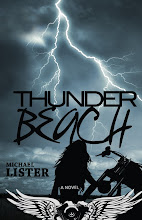
Over the past several months, while working on a novel set in our area during Thunder Beach, I have been all over the place doing research. During my mostly nighttime odyssey, I’ve met some interesting and amazing people, had some unforgettable experiences, and discovered some truly remarkable local places.

In future columns I will share more of these (and, of course, they’ll be in my book), but this week I want to tell you about a couple of my friends and the great music they’re making.

The first is my dear friend Dave Lloyd, who, with Scott Neese, form The Manatees, and perform every weekend at Hammerhead Fred’s on Thomas Drive. Their music, made up of a guitar and steel drums, sounds like vacation to me—and is a perfect companion for good food and quiet conversation with close friends. They take requests, so ask for your favorite song, but regardless of what they play, it’s soothing music that feeds the soul. I dearly love Dave, and think he’s just one of the best guys around. He does good everywhere he goes—as a pastor, counselor, social worker—and this comes through his voice and out of his instrument.

My favorite number is when Dave pulls out his Ukulele and does a beachy groove version of Jim Croce’s “Operator.” Every time I hear him perform it, I get a sad, longing feeling that feels like nostalgia for what I’m not sure I can say (or would want to). His version of the song stays with me for days afterwards—and unlike some songs that get stuck in my head, I’m grateful it’s there.

Go see Dave on Friday, Saturday, or Sunday nights from 6:00 p.m. until 10:00 p.m. and tell him his friend Michael sent you.

Another friend (and great drummer), Crook Stewart, who has been helping me pick up the drums again after too many years of not playing, introduced me to a new friend, and amazing musician, Steve Wiggins.

Because I’ve got a story in an anthology called “Delta Blues” and will be playing the drums in an authors’ band for the release party, both Crook and Steve told me I needed to hear the best blues drummer around, Lenwood Cherry Jr. This past week I finally got to—when I was one of only six people at one of the most amazing live blues sets I’ve ever heard. In fact, I got to hear Mr. Cherry play and sing a blues version of one of my favorite all-time songs, “Ain’t No Sunshine.” I love this song so much I have entire CDs and playlists of nothing but covers of it, and his version was the best I’ve ever heard.

With Steve’s fingers dancing up and down the keyboard and Kerry McNeil, a true blues bassist and vocalist thumping the bass and belting out the blues, I felt like I was in the Delta—at the Crossroads in Clarksdale or on Beale Street in Memphis, yet I was sitting at a piano bar right here on PCB. That’s where you can find Steve playing his piano every Tuesday and Thursday nights, or being joined by Crook and others for an open jam session on Wednesday nights or with his full band on Friday and Saturday nights.

Stop by and see Steve and his talented friends and tell him his new friend Michael sent you—and if you go on Wednesdays, take your instrument with you.

And look for Steve on August 14th at the Marina Civic Center for a concert as part of my friend Jennifer Jones’ inspired Backstage Pass series, where he will not only perform on a 9-foot grand piano, but record a new live album.

Good friends, good food, and good music are a big part of what makes life sweet, magical, and meaningful. And all three are best when shared. I’m grateful for this opportunity to share some of mine with you. Contact me through my website or Facebook if you want to share them in person. I’d love to have you for a friend, too.