Friday, June 11, 2010

A Million Young Poets


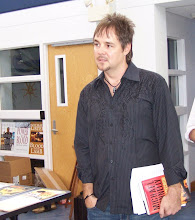
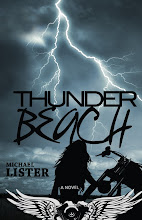
Last week, I traveled to New York for “Double Exposure” and “Thunder Beach” signings and meetings as part of Book Expo America, the publishing industry’s largest trade show, where hundreds of publishing organizations meet to promote their upcoming summer and fall titles, and every branch of the industry converges to discuss and plan for the future.

Over 22,000 attendees crowded into the Javits Center, where, in spite of the current economy and the state of reading in America, there was genuine excitement and optimism. Books were signed. Deals were struck. Contacts were made.

It was a quick, but extremely successful trip for me. Had great meetings with my agent and editors and publishers. Had two signings for “Thunder Beach” and ran out of books at each.

This was only my second trip to New York, but I love the city—particularly walking down the streets in the middle of the night where there are so many other night owls like me bringing energy and excitement to the city that never sleeps.

Being one person in a city of over eight million is not unlike being one author at an industry event of over twenty thousand, but I felt completely at home in both places—comfortable, relaxed, open to the experiences offered.

People come to New York for many reasons. It’s a special place, and in some ways seems the center of the world. As Jay-Z says, it’s a “Concrete jungle where dreams are made of. There’s nothing you can’t do. These streets will make you feel brand new. The lights will inspire you. One hand in the air for the big city. Street lights, big dreams all looking pretty. No place in the World that can compare.” But as I reflect on my BEA experiences, it’s a song by John Mellencamp and not Jay-Z that seems most fitting.

People come to BEA for many reasons. Publishers to promote their lists and authors, authors to promote their books, agents to cut deals, readers to get books and the autograph of a favorite author, and scores of aspiring writers come looking for a publisher.

At my publisher’s booth, like all the others, part of the constant parade of people passing by included self-published authors, clutching their books, hoping to get a publisher to take a look. It’s not the way to go about getting a publisher. It’s an impatient person’s way of attempting a shortcut that nearly never works, but I understand the drive.

People want to be published for many reasons. Some have visions of grandeur, of fame and fortune—all of which are absurd. There are far better and easier ways to become rich and famous or infamous. The most recognized authors aren’t a fraction as famous as a B-list movie star or national politicians. And as far as money, it’s laughable. The only sure way to make money as a writer is to write ransom notes.

Some people want to be published because of ego, because of needs inside them that having their name on a dust jacket can’t even begin to meet. For others, it’s perceived as a way of cheating death, of leaving something behind when the curtain falls on this short life. Maybe a portion of all these things is in every writer, but for some of us, it all comes down to our way of being in the world. I (like so many writers I know) write because I have to. It’s how I process, how I express.

It’s how I give, what I have to offer.

What I want more than anything is to be a great writer. It’s why I write and write and write and write and write, why I read and read and read and read, why I study and seek and listen and discuss and long and yearn and crave. And secondly, I want to be read.

That’s it.

I want to write good and great books—getting better and better all the time—and I want to be read widely and deeply.

I don’t want to shortcut the process or cheat the system. I want to work hard, to sacrifice and invest and grow and become. I want to bleed on the page. And all I’m asking in return is for lots of readers. I, like so many writers, just want to be read, just want to be heard.

Which is why these words from John Mellencamp’s song, “Check it Out” have been echoing around in the chamber inside me.

A million young poets
Screamin’ out their words
To a world full of people
Just livin’ to be heard
Future generations
Ridin’ on the highways that we built
I hope they have a better understanding

I guess I’m not particularly, literally young (could I pass for youngish?), but I’ve never felt younger. I’m not a screamer, but “a young poet living to be heard, screaming out his words to a world full of people who can’t hear because of all the noise” feels right to me.

And there are millions of us. And whether it’s in New York or at BEA or in the wide, wide world, our little words, our weak voices get drowned out, are missed, are dismissed. Yet, we keep writing, keep publishing (or trying to). In spite of rejection or bad reviews, or the insult of indifference, we don’t stop because we can’t.

I can’t not write.

I’ll never write a perfect novel, but I’ll also never stop trying.
This is why I went to New York, to BEA—and why I was just one among millions. A million young poets.

It’s (or appears to be) a Cruel, Cruel Summer


Summer has officially begun—at least as far as movies are concerned, and I saw two of the biggest releases so far this past weekend—“Robin Hood” and “Iron Man 2.”

Both movies were better than I expected—which is not to say either is great—just that they exceeded my relative low expectations.

Neither film fulfills its respective potential, neither delivers on the promise it makes, but both are entertaining and not without merit.

“Iron Man 2”

With the world now aware of his dual life as the armored superhero Iron Man, billionaire inventor Tony Stark (Robert Downey Jr.) faces pressure from the government, the press, and the public to share his technology with the military. Unwilling to let go of his invention, Stark, along with Pepper Potts (Gwyneth Paltrow), and James "Rhodey" Rhodes (Don Cheadle) at his side, must forge new alliances—and confront powerful enemies.

“Iron Man 2” is neither as good as “Robin Hood” or the movie it is sequel to. Still, Robert Downey, Jr. is perfect for the part and plays Tony Stark with credible snarkiness and charm.

Ultimately, Tony Stark is a shallow man—limited, juvenile, vain, his bad playboy attitude and brilliance the only things to recommend him. Because of this, there’s very little exploration, soul-searching—even the few self-discoveries he does make are unearned and unsatisfying.

It occurs to me that both Batman and Iron Man are rich kids with superhero suits, but unlike Batman, who’s dark, tortured soul and the journey it drives him to is inspiring and instructive, there’s a big gaping hole in Iron Man’s chest—leaving only a little room for heart and soul. Take away the suit, and batman remains a fascinating, eccentric, engaging man, but Iron Man is just a man—and not even—rather a spoiled man child with egomania and expensive toys.

Christopher Nolan (with help from his brother, Jonathan, and others) has set the standard for comic book and superhero movies with “Batman Begins” and “The Dark Knight,” and watching a movie like “Iron Man 2” only serves to remind us how good they really are.

“Robin Hood”

Far more primitive, but every bit as heroic, the flawed archer and freedom fighter, Robin Hood makes Iron Man look cartoonish.

Following King Richard's death in France archer Robin Longstride, along with Will Scarlett, Alan-a-Dale and Little John, decides to return to England. They encounter the dying Robert of Locksley, whose party was ambushed by the treacherous Godfrey, who hopes to facilitate a French invasion of England, and Robin promises the dying knight he will return his sword to his father Walter in Nottingham. Here, Walter encourages him to impersonate the dead man to prevent his land from being confiscated by the crown, and he finds himself with Marian, a ready-made wife. Hoping to stir baronial opposition to weak King John and allow an easy French take-over, Godfrey worms his way into the king's service as Earl Marshal of England and brutally invades towns under the pretext of collecting royal taxes. Robin rallies the barons and the king in an attempt to thwart the invasion, but do they have what it takes?

“Robin Hood” has the gloss of historicity about it, but it is as truth and not as fact that the film excels. A story is true not because it is factual, but because it is credible, because the humans experiencing it can identify with the humans in it and the situations and circumstances they find themselves in. Thus the oft quoted intro to a tale, “The following story is true though none of it really happened.”

“Robin Hood” had far more character development than I expected, far less frenetic action and endless battle sequences. This has led some moviegoers to complain that the film is sluggish and slow-paced, but there’s plenty of action—and it’s made all the more thrilling because we know and care about the people involved.

Ridley Scott, like his brother, Tony, is one of the best big-budget Hollywood directors working today, and he does an outstanding job here, showing far more restraint than I expected, remaining largely invisible in service of the story.

As you would expect, “Robin Hood” is about tyranny and corruption, the need for lambs to become lions when the rich and powerful abuse their position even more than usual, and the heroic individual who leads them for “cometh the hour, cometh the man.” But it’s also about love, a romance between two adults neither looking nor particularly open to romance discovering its irresistibility when attraction, character, and circumstance offer opportunity.

Though I enjoyed both movies, I can really only recommend “Robin Hood”—and not even it highly, which is far more troubling for what it portends about the prospects for this summer at the local Cineplex than the relative disappointment of these two movies. And, sadly, that’s not all that surprising—or, frankly, surprising at all, but what’s wrong with state of motion pictures in America, particularly ones released in the summer, deserves a column all its own, which gives me an idea.
Stay tuned . . .

Thursday, April 8, 2010

What is God?


Last weekend, I pulled into a closed bank parking lot on 23rd Street where Girl Scouts were selling cookies.

As I stood there looking at the familiar boxes, wondering why Samoas weren’t among them, and asking how sells were going, I heard the following:

“What is God?”

“What?” I asked.

“What is God?” the tween Girl Scout asked me again.

It may very well be the most important question each of us asks and answers—determining all our other questions and answers—and it was interesting to hear it from a little girl selling cookies.

It’s the question I’ve been asking myself , one I’ve been answering and not, since childhood, and for a fraction of a second I wondered why she was asking, then it hit me.

I realized the reason for the question in the same moment she nodded toward my arm.

I was wearing a short sleeve shirt, and peeking out from beneath the cuff, written on my left bicep in black ink the words “is God” were visible.

“What is God?” she was asking, emphasizing the “what” because she could see the “is God.”

Most talk about God in our culture is simplistic, sexist, silly, and downright juvenile. God is reduced to that which we project our fears, biases, hopes, and dreams onto. God likes what we like, hates who we hate because we have created what we call “God” in our own image.

But God is a mystery—beyond us to such an extent we’re only left with myth and metaphor, story and poetry.

Transcendent. Ineffable. Sublime. What is God is what we should be asking all the time. Unfortunately, many among us are taught from an early age exactly what God is. We live with a rigidity and certainty, so convinced we know what God is we stop asking, keeping us from any hope of ever glimpsing what God is—which, by the way, is the best we can ever hope to do. A glimpse of ultimate reality, of the ground of being, of the great mystery, is rare and humbling and worth everything—and probably won’t happen as long as we believe we already know what God is.

If we would continually empty ourselves, be open, and ask, as my cookie salesperson did, “What is God?” we might just get a glimpse.

I take seriously the question my own arm inspired the Girl Scout to ask. If you do, too, and would like to join me in the asking, I’ve pulled a few books off my shelves to help us ask the questions (don’t trust any books or gurus that claim to have the answers).

“The God We Never Knew” by Marcus Borg is the most accessible and easy to understand of the stack of old friends I’m looking at as I write this. He’s a Jesus scholar and an active person of faith who takes modern scholarship and non-literal ideas of religion and makes them easy to understand.

Karen Armstrong is another writer who takes scholarship and interprets it for the masses. Not as personal or devotional as Borg, Armstrong takes a more historical and academic approach. Her books, “A History of God,” “The Battle for God,” and “The Case for God” are excellent—wise, learned, brilliant, thorough, profoundly thought-provoking.

“God: A Biography,” by Jack Miles approaches the God of the Hebrew Bible (or more accurately the gods) as a literary character, combining narrative, literary criticism, and modern scholarship into a fascinating look at the most famous and most written about character in human history.

“The Disappearance of God,” by Richard Friedman looks at the presence and increasing absence of God in the Bible. In many ways, a mystery story, “The Disappearance of God” is engaging and insightful, revealing, as all books about God do, far more about us than God.

Finally, and perhaps most importantly for our male-dominated, sexist culture, I highly recommend feminist theologians, Sallie McFague, Elizabeth Johnson, and Rosemary Radford Ruether, who challenge our ridiculous and limiting masculine concepts of God. “She Who Is,” “Sexism and God-Talk,” “Models of God,” and “The Body of God” are excellent aids in restoring the lost feminine face of God, and it’s difficult to imagine anything we need more. Losing the metaphor of Mother God has made us orphans capable of hating our own siblings.

I’m not just recommending each of these books, but recommending you read them all.

In most of the ways our culture judges such things, I’m not a religious person. And because of the ways our culture judges such things, that suits me just fine. But
I’ve spent my life emptying and asking the questions and will continue to. And I’m continually frustrated by how little the most religious (as our culture judges) among us know about their own religion or its sacred texts—not to mention religion
in general or theology.

The best way each of us can keep from being ignorant and arrogant, defensive and violent, is to, in humility, ask the questions, emptying ourselves of all we think we know and questioning everything—including the questions.

Over the years of my decades-long quest, I’ve come up with a few answers—answers I still continue to question, except for one. The only answer I am completely convinced of, the one that, if I am wrong about, I want to be wrong, is the one tattooed on my left bicep, the bottom part of which led the Girl Scout to ask, “What is God?”

I lifted my sleeve so she could read the answer to her question and she did.
“God is love is God,” she read, and there was nothing else for either of us to say on the subject.

Wednesday, March 31, 2010

Romance and Rhetoric


“The Russia House” is a romance—of rhetoric as much as relationship, with ideas as much as individuals. It’s about a scientist with the soul of a poet, a heroic drunk who finds it in himself to become a decent human being, and the bewitchingly beautiful woman who makes them both better men.

“The Russia House,” based on the John LeCarre novel, stars Sean Connery and Michelle Pfeiffer as two people caught in a web of spies and politics, whose love could prove fatal to them both. When Katya (Pfeiffer), a beautiful Russian book editor, attempts to send British publisher Barley Blair (Connery) a manuscript written by a noted Soviet scientist, she unwittingly draws them both into a world of international espionage. The manuscript, which contains information that could alter the balance of world power, is intercepted by the West’s spy-masters who then send Blair to Russia to gain more information on the mysterious document. But after Blair falls for Katya, he finds himself torn between his mission and the woman whose passion for her country and for Blair knows no bounds.

This is one of those rare films I return to time and again—twice a year on average—that continues to affect me deeply. I love its idealism. I love its romanticism. I love that it takes these two ways of being in the world and juxtaposes them with cynicism of the benighted, fearful men running the world.

“The Russia House” is a romance I can believe in, one that resonates with me, one that has credibility, one that is grounded in reality. It miraculously manages to be wise and profound, about real issues of honor and justice, of love and hate, of life and death, yet remains wondrously, wildly romantic.

The events of “The Russia House” are set into motion because of these words by Barley at a writers retreat in Russia during the Cold War:

Barley: I believe in the new Russia. You may not, but I do. Years ago, it was just a pipe dream. Today, it's our only hope. We thought we could bankrupt you by raising the stakes in the arms race. Gambling with the fate of the human race.

Russian writer: Barley, you won your gamble. Nuclear peace for years.

Barley: Oh, rubbish. What peace? Ask the Czechs, the Vietnamese, the Koreans. Ask the Afghans. No. If there is to be hope, we must all betray our countries. We have to save each other, because all victims are equal. And none is more equal than others. It’s everyone's duty to start the avalanche.

Russian writer: A heroic thought, Barley.

Barley: Listen, nowadays you have to think like a hero just to behave like a merely decent human being.

Later, a writer named Dante, who turns out to be a scientist as well as a poet, asks Barely to promise him if he ever manages to act heroically, Barley will respond as a decent human being. Barely does, but when Barely discovers what Dante wants his help with, he wavers. Dante tells Barley that his thoughts on world peace have inspired him, which causes Barley to be confronted with whether he is willing to die for what he claims to be his most beloved beliefs.

Barley: I'm not the man you thought I was.

Dante: You do not have to remind me that man is not equal to his rhetoric.

None of us are equal to our rhetoric, but both Dante and Barely manage to be when it really matters, making them decent and heroic, and reminding us that being brave isn’t the absence of fear, but remaining resolute in spite of it. This, for me, makes “The Russia House” a profoundly inspiring film. If Boozy Barely Blair can be a hero, so can I, so can you.

Sean Connery and Michelle Pfeiffer are absolutely brilliant in their roles as Barely and Katya, and though in general I hate the way Hollywood too often casts young women and old men, because of the characters and the casting, it works here. But as good as Connery is, Pfeiffer completely disappears into the role of Katya—something difficult for such an extremely beautiful woman to do. With her accent and mannerisms and the persona of the old Russian soul she’s become, Pfeiffer is Katya.

“The Russia House” vividly and convincingly shows how few people—mostly scared, paranoid, small-souled men—keep the world from peace. It also shows the power of love.

Love, as the most powerful and powerless force in existence, gives us the inspiration and the ability to change, to become.

Love is the ultimate act of faith, of trust, and Cold War espionage provides a perfect backdrop of distrust to test the resolve of Dante, Barley, and Katya—lovers of truth, lovers of life, lovers of ideas, lovers of literature and art, lovers of people more than countries, of love and peace more than might and power.

Even in the face of certain death, Dante, Barely, and Katya hold fast to love, risking all for it—including their very lives—for they know what the author of the biblical book of the Song of Songs knew: “Set me as a seal upon your heart. For love is as strong as death.”

Barley: I love you. All my failings were preparation for meeting you. It’s like nothing I have ever known. It’s unselfish love, grown up love. You know it is. It’s mature, absolute, thrilling love.

Katya: I hope you are not being frivolous, Barley. My life now only has room for truth.

Barley:You are my only country now.

Love conquers all. It changes us. It changes the world—toppling empires, removing regimes, lasting, remaining, enduring. Long after the Russian and American empires are ash-streaked heaps, love will still be changing hearts and minds, giving hope and strength, comforting, inspiring, transforming. Boozy Barley Blair acted heroically in the way only decent human beings can because of love. Love gently leads us to become our best selves, gives us the best hope of being equal to our romance and rhetoric. These three remain: faith, hope, and love, but the greatest of these is love.

Wednesday, March 17, 2010

My Perfect Moonlight Movie


It occurred to me recently that I watch movies the way I read books—alone.

True, I don’t watch every movie alone. Occasionally, I brave the theater (with its mouth-breathing popcorn crunchers and screen talkers—harsh and unkind, I know [and I’m known for being neither], but I genuinely love film and these people prevent me from fully entering its world). Sometimes I even take a move-watching companion, but mostly I watch movies in high-def on my Sony 55 inch HD TV in my study, reclined in my leather Stressless chair surrounded by my books.

Not only do I watch movies alone, but I mostly watch them late at night when the world is sleeping—a trend that goes back to my adolescence as the only night owl in a house of early birds.

There’s no better way to get caught up or swept away than alone with a good movie on the dark side of the witching hour. And some movies are just meant to be watched this way—“Frankie and Johnny” foremost among them. It’s a movie about loneliness in which the crises-ridden climax takes place on a long, lonely Saturday night as Clair de Lune, which is French for moonlight, plays in the background.

Garry Marshall (“Pretty Woman”) directs the screen adaptation of Terence McNally’s 1987 play “Frankie and Johnny in the Clair de Lune,” the story of an ex-con, short-order cook (Al Pacino) who drives a waitress (Michelle Pfeiffer) crazy with his intense courtship and professions of love. McNally adapted his two-character play for the screen and has expanded and rearranged his original story, adding a variety of settings and extending the narrative out over a longer period of time, while surrounding the lovers with additional characters. Kate Nelligan, another lonely waitress, and Nathan Lane, a gay neighbor, really standout.

This exchange between Cora (Kate Nelligan), a waitress standing at the order counter trying to get the old, overweight cook, Tino, to finish her customer’s food, is an example of the movie’s good-humored humor.


Cora: Tino! Who do ya gotta %$#@ to get a waffle here?

[Tino points at himself, Cora looks back at a customer]

Cora: Forget the waffle!


“Frankie and Johnny” is a sweet story—but not overly so. There’s a real sadness present, too. These are people whose lives haven’t turned out like they had hoped—for those among them with enough hope to even dare to hope. They are living lonely, little lives of service and subsistence, but doing so with humor and dignity, and the desire to make real connections.

As charming and funny as “Frankie and Johnny” is, it’s Al Pacino and Michelle Pfeiffer’s performances that elevate it—him, as a middle-aged man so desperate, he’s needy and obnoxious, her, as a sad and wounded woman so gripped by fear she’s hardened and defensive. Here are two examples of their typical interactions:


Frankie: I feel like you’re too needy.

Johnny: Oh, come on. What does that mean?

Frankie: I just feel like you want everything I am. You know?

Johnny: Yes, I do. Why not?


Frankie: I’m retired from dating.

Johnny: What does that mean? Something happen to you as a kid? What happened?

Frankie: You know. Why is it that anytime a woman doesn’t want to get involved in a relationship, men think they were messed with as a kid. Wrong. They were messed with as a woman.

Each time I watch “Frankie and Johnny,” I feel the same way—connected, compassionate, happy and hopeful. The movie is not without sadness and darkness, loss and lovelessness, but it’s because, and not in spite, of these things, that an earned sense of hope appears, grace out of the grime and grittiness.

In addition to the witty writing, charm, sweetness, wonderful performances, “Frankie and Johnny” has a strong, complimentary soundtrack—the best piece of music by far, “Clair de Lune,” third movement of Suite bergamasque by Claude Debussy, a piano depiction of a Paul Verlaine poem.

When it begins to play on the small radio in her apartment, Frankie says, “That music is nice. Makes me think of grace.”

I can’t think of anything better than that, and as it turns out, it is a grace for Frankie and Johnny.

As Frankie once again begins to crawl back inside her distrust and defensiveness, Johnny calls the radio station’s DJ and asks him to play it again in hopes it will save their relationship.

Johnny: Now, there's a man and a woman. He's a cook. She's a waitress. Now, they meet and they don't connect. Only, she noticed him. He could feel it. And he noticed her. And they both knew it was going to happen. They made love, and for maybe one whole night, they forgot the 10 million things that make people think, I don't love this person, I don't like this person, I don't know this—instead, it was perfect, and they were perfect. And that's all there was to know about. Only now, she's beginning to forget all that, and pretty soon he's going to forget it, too.

Does he play it again? Does Frankie come out of her shell and risk love? Is it possible for two people to find later in life what was so excruciatingly elusive earlier when they were younger and more hopeful and more sure?
Watch the movie or read the play, preferably alone and late at night, and let the Clair de Lune shine its grace on you, as you witnesses to their story.

Wednesday, March 10, 2010

Bloodletting Brilliance


Cormac McCarthy’s “Blood Meridian” is a vicious, violent, relentless literary bloodletting masterpiece of American fiction—an apocalyptic prose poem.

It’s as well written as anything I’ve ever read—the writing itself, better than even McCarthy’s other peerless works, is a dark, devastating delirium of alchemic anarchy.

The novel chronicles the brutal world of the Texas-Mexico borderlands in the mid-nineteenth century. Its wounded hero, the teenage Kid, must confront the extraordinary violence of the Glanton gang, a murderous cadre on an official mission to scalp Indians and sell those scalps. Loosely based on fact, the novel represents a genius vision of the historical West, one so fiercely realized that since its initial publication in 1985 the canon of American literature has welcomed Blood Meridian to its shelf.

As a novelist, as a student of literature, even when I’m reading for “entertainment,” I’m not. This is especially true of a writer like McCarthy. I can’t fathom anyone purporting to have literary aspirations or claiming to be a student of American literary fiction, not studying this great American novelist.

In recent years, thanks to film adaptations and Oprah, McCarthy’s audience and influence has increased. With “No Country for Old Men” and, especially, “The Road” he has moved more into the mainstream, and while these are more accessible, more contemporary, “Blood Meridian” is the masterwork, that which will surely endure even if no other work does.

I was first introduced to Cormac McCarthy by literary critic, Harold Bloom, whose books have taught me so much over the years.

Here is a bit of his introduction to “Blood Meridian.”

“‘Blood Meridian’ seems to me the authentic American apocalyptic novel, more relevant even in 2010 than it was twenty-five years ago. The fulfilled renown of “Moby-Dick” and of “As I Lay Dying” is augmented by “Blood Meridian,” since Cormac McCarthy is the worthy disciple both of Melville and of Faulkner. I venture that no other living American novelist, not even Pynchon, has given us a book as strong and memorable as “Blood Meridian,” much as I appreciate Don DeLillo’s “Underworld;” Philip Roth’s “Zuckerman Bound,” “Sabbath’s Theater,” and “American Pastoral;” and Pynchon’s “Gravity’s Rainbow” and “Mason & Dixon.” McCarthy himself, in his Border Trilogy, commencing with the superb “All the Pretty Horses,” has not matched “Blood Meridian,” but it is the ultimate Western, not to be surpassed.”

But the relentless brutality of “Blood Meridian” can’t be denied. It’s not an easy book to read. Listen to Bloom’s confession.

“My concern being the reader, I will begin by confessing that my first two attempts to read through “Blood Meridian” failed, because I flinched from the overwhelming carnage that McCarthy portrays. The violence begins on the novel’s second page, when the fifteen-year-old Kid is shot in the back and just below the heart, and continues almost with no respite until the end, thirty years later, when Judge Holden, the most frightening figure in all of American literature. So appalling are the continuous massacres and mutilations of “Blood Meridian” that one could be reading a United Nations report on the horrors of Kosovo in 1999.

“Nevertheless, I urge the reader to persevere, because “Blood Meridian” is a canonical imaginative achievement, both an American and a universal tragedy of blood. Judge Holden is a villain worthy of Shakespeare, Iago-like and demoniac, a theoretician of war everlasting. And the book’s magnificence—its language, landscape, persons, conceptions—at last transcends the violence, and convert goriness into terrifying art, an art comparable to Melville’s and to Faulkner’s.

When I teach the book, many of my students resist it initially (as I did, and as some of my friends continue to do). Television saturates us with actual as well as imagined violence, and I turn away, either in shock or in disgust. But I cannot turn away from “Blood Meridian,” now that I know how to read it, and why it has to be read. None of its carnage is gratuitous or redundant; it belonged to the Mexico–Texas borderlands in 1849–50, which is where and when most of the novel is set. I suppose one could call “Blood Meridian” a “historical novel,” since it chronicles the actual expedition of the Glanton gang, a murderous paramilitary force sent out both by Mexican and Texan authorities to murder and scalp as many Indians as possible. Yet it does not have the aura of historical fiction, since what it depicts seethes on, in the United States, and nearly everywhere else, well into the third millennium. Judge Holden, the prophet of war, is unlikely to be without honor in our years to come.

“Even as you learn to endure the slaughter McCarthy describes, you become accustomed to the book’s high style, again as overtly Shakespearean as it is Faulknerian. There are passages of Melvillean-Faulknerian baroque richness and intensity in “The Crying of Lot 49,” and elsewhere in Pynchon, but we can never be sure that they are not parodistic. The prose of “Blood Meridian” soars, yet with its own economy, and its dialogue is always persuasive.”

I agree with Bloom. As interesting, fascinating, engaging as its characters are, as much as their journey is epic and suspenseful, it is the language of “Blood Meridian” that elevates it to the lofty position of art, of enduring, timeless, literature. Mastery of language like this happens so seldom, a work like this is published so infrequently, all of us who hold story sacred, who claim to care about culture, about art and literature, should buy it, read it, study it, reread it, repeat.

Like Bloom, I esteem Roth, Delillo, Auster and others, but, for me, no writer since Shakespeare has so tapped at and tested the limits of language as Cormac McCarthy. Of all the heady and humbling things said about my last novel, “Double Exposure,” nothing meant as much as when reviewers and readers compared it to McCarthy’s work.

“Blood Meridian” is just what the title says—the highest point or stage of development—and not just for Cormac McCarthy, but for literature. It’s a midday zenith of world literature, a peek, a meridional masterpiece written in blood.


A Few Notes:

Thanks so much to all of you have sent such warm and generous congratulations on “Double Exposure” winning a Florida Book Award. I’m truly grateful for both the award and for your kind support.

I’m very happy that “Hurt Locker” took best picture and Kathryn Bigelow won best director at the Oscars. Well deserved! It gives me hope. In the end, I think “Avatar” is little more than an amazing technical achievement and stunning visuals.

Walking into the theater to see a movie recently, I had to pass the two enormous gray garbage cans filled with the trash from the previous audience and it made me sick. We’ve got to do better—not only with what we put in our bodies, but with all the waste, all the garbage we’re creating. Throwing something away doesn’t make it really go away—whether it’s plastic bags or deadly chemicals (and nearly all chemicals ultimately are). I challenge you as I am challenging myself. Consume less, waste less, discard less, reuse more.

Wednesday, March 3, 2010

Wide Open Spaces and the Sound of Silence


Quiet.

Slow-paced.

Character study.

Not words you’ll hear used to market many movies—especially in the era of blockbusters and Cineplexes—but for a film to truly be affecting, to give us, its audience, the opportunity to connect with its characters, it must involve no small amount of moments that involve just such things.

In the same way each of us need time, silence, and solitude to become our best, deepest, richest, most inwardly complex selves, a film needs a certain pace and space for characters to live and breathe. A life fitted with time to think, space to meditate, to contemplate, to be, is essential for soul building. A story imbued with quiet not only allows character to develop, but enables us to connect.

And nothing’s more important.

Stories are magic, are sacred things, because they give us multiple lives, infinite incarnations, endless opportunities to so indentify with a character that we become that character, that we experience existence from inside another.

Of course, this can be done during the quiet moments between action sequences or battle scenes, but the more the moments, the more deeply we experience the other, and if an entire story is thus, well then, all the mo’ betta’.

“Crazy Heart” is just such a story—a quiet, slow-paced, character study. Affecting. Moving. More.

Fifty-seven year old Bad Blake is a minor legend as a country singer. But that status only nets him gigs in bowling alleys and bars. Bad is an overweight, chain-smoking alcoholic. He is informed by a doctor that his self-destructive lifestyle will send him to an early grave. This self-destructive behavior has also led to several failed marriages and a grown son who he has not seen since he was four. While performing in Santa Fe, Bad meets newspaper journalist Jean Craddock, who wants to do a piece on him for her newspaper. Despite the differences in their ages, Jean and Bad begin a relationship. Jean and her four year old son Buddy become the closest thing to family Bad has. Not coincidentally, during this time, he experiences a resurrection of sorts in his career, but what looks to be a promising professional and personal future may be jeopardized by his hell-bent self-destructiveness.

“Crazy Heart” is a good enough film, but it’s the performances that elevate it into something worth recommending. Jeff Bridges and Maggie Gyllenhaal are quietly mesmerizing.

As I watched “Crazy Heart,” I kept thinking that what I was seeing was a remake—or at least the spiritual offspring—of “Tender Mercies.” And then Robert Duvall made an appearances (and later I find out he produced it), and it confirmed the connection between the two films for me.

“Tender Mercies” stars Robert Duvall (in an Oscar-winning performance) in a touching story of a down-and-out country singer named Mac Sledge who meets Rosa Lee, a young widow (Tess Harper) in a small Texas town. But as their relationship blossoms, Mac’s years of hard living resurface when his music star ex-wife (Betty Buckley) appears bringing his estranged daughter (Ellen Barkin) with her. It’s a low-key, contemplative film directed by Australian Bruce Beresford (“Driving Miss Daisy,” “Breaker Morant”), written by Horton Foote (“To Kill a Mockingbird”), who won an Oscar for his screenplay.

“Tender Mercies” is that rare film that is far, far greater than the sum of its parts—a simple story told simply, its understated performances pitch-perfect for this masterpiece of quietude.

Both “Crazy Heart” and “Tender Mercies” are redemption stories set in the sad, alcohol-soaked world of country music, where the music itself is a character. Bad sings (and lives) that “falling feels like flying for a little while” and Mac keeps reminding himself over and over that no matter how painful he must “face reality.”

Though film as a medium is limited in showing it, simplicity in one’s outer life often leads to richness and complexity in one’s inner life. It’s what Walden is about—going to the woods to live deliberately, to front only the essential facts of life, to learn what it has to teach, and not, when we die, discover that we had not lived.

It’s a big part of why I live where I do (on a lake in a small town) and an even bigger part of why I live the way I do. Without time to think, without space to breathe, without stillness and solitude, we’re like plants in a windowless, smoke-filled office dying without sun and rain and fresh air. Whether we’re confronting alcoholism or existentialism, we, like Bad Brad and Mac, need time and space and love.

Love changes us. It’s the only thing that can. Actually, it’s far more accurate to say that love gives us the opportunity, the environment, in which change can occur. Jean’s love for Bad Blake, Rosa Lee’s love for Mac Sledge, provide a milieu for the men to change—any substantive change they do.

Unconditional love is the greatest gift we can give ourselves and others.

Acceptance.

Being accepted—completely and utterly accepted—just as we are. No judgment. No rejection. No expectations. Nothing but passionate compassion, understanding, appreciation, kindness.

Rosa Lee’s love for Mac is unconditional. She is constant. She is patient. She is giving. Mac experiences God’s tender mercies through her—which is what makes this small, quiet film profound. She gives Mac something Jean isn’t quite able to give Bad. The capacity for love each woman has is different. They are different and have had very different experiences.

Life is suffering—much of it unnecessary and self-inflicted—but, as Mac discovers, being loved, truly loved, makes even tragedy and trauma bearable. Trusting in, resting in, being secure in another’s (and ultimately God’s) love enables us not to survive life, but to experience it with hope and joy.

Mac tells Rosa Lee, “I don’t trust happiness. I never have and I never will,” but despite his claim, and the way his self-destructive decisions have so often caused it to be true, her unconditional love is showing him day by day, moment by moment, he can trust goodness and good things.

And it’s not just washed up, alcoholic country singers who need unconditional love. We all do. Unfortunately, too often when fronted with it, we find it so foreign, so inconceivable, we run from it. Mac jumps in the old pickup truck, buys a bottle, and runs as fast as he can, but something, thankfully, mercifully, brings him back.
What was it that brought him back? The kind, loving, and oh so tender mercies of a good woman (and the God loving him through her).